Buy sportcoach.eu ?
We are moving the project
sportcoach.eu .
Are you interested in purchasing the domain
sportcoach.eu ?
domain@kv-gmbh.de · 0541-91531010
Buy sportcoach.eu ?
What is the difference between il faut que and il faut?
"Il faut" is used to express a general necessity or obligation, while "il faut que" is used to introduce a specific action or event that is necessary or required. For example, "il faut manger" means "it is necessary to eat" in a general sense, while "il faut que tu manges" means "you need to eat" in a specific sense. "Il faut" is used to make a general statement about what is necessary, while "il faut que" is used to specify what needs to be done. **
When do you use il faut and il ne faut pas?
"Il faut" is used to express what is necessary or required, while "il ne faut pas" is used to express what is not allowed or should be avoided. For example, you would use "il faut" to say "il faut étudier pour réussir" (it is necessary to study to succeed), and "il ne faut pas" to say "il ne faut pas fumer dans ce lieu" (smoking is not allowed in this place). These expressions are used to give advice, make recommendations, or set rules. **
Similar search terms for Valpolicella-Classico-Il-Sasso
Top-Angebote
Products related to Valpolicella-Classico-Il-Sasso:
-
Valpolicella Classico Viviani 2023The Valpolicella Classico by Viviani expresses the most youthful, versatile, straightforward, and fragrant character of the territory: an exceptional blend of modernity and territorial adherence. The tasting is indeed young and smooth, with a crunchy and easy-drinking sip, resulting from the processing carried out exclusively in steel of the indigenous grapes. It is a label that pairs perfectly with Mediterranean cuisine recipes, first courses, cold cuts, white meats, and even with flavorful fish dishes. It is the everyday red par excellence: simple and immediate but capable of delivering great satisfaction at the table, accompanying home cooking. This Valpolicella Classico Viviani originates from a blend of indigenous red grape varieties, where, alongside 70% Corvina Veronese, we find 30% Rondinella. The must obtained from the soft pressing of the grapes ferments spontaneously in steel containers thanks to the action of indigenous yeasts, in respect of the most authentic peasant traditions. The wine remains in steel to mature until February, and then further refines for two months directly in glass, after bottling. The Viviani Valpolicella Classico develops in the glass with a typically ruby color, crossed by light violet veins, evident at the rim. The nose is filled with fine and subtle aromas, announced with elegant fruity and spicy touches, enriched also by nuances of aromatic herbs. On the palate, it is easy-drinking, with a tasty and satisfying sip, relying on a tannic structure finely integrated into the overall structure. A Veneto red that, with this vintage, satisfies the main critics in the sector, not just Italian: considering the advantageous price, not tasting it would be a shame.9,00 £*Shipping: 48,00 £Secure redirect to the provider
-
Valpolicella Classico Speri 2025The Valpolicella Classico is the simplest wine with which the Speri winery tells us about the different facets of the Valpolicella terroir. In this label, fresh and light sensations dominate both on the nose and on the palate, enhanced by the choice made during vinification and aging, where only steel and vitrified cement are used, leaving wood aside. A bottle with a immediate profile, appealing also thanks to the final price at which it is offered, truly encouraging for those who want to start getting to know the Venetian reds. This Valpolicella Classico is born from a blend of indigenous red grape varieties from the Veneto region, specifically Corvina Veronese, Rondinella, and Molinara. These three varieties are cultivated by Speri using the traditional pergola system, in plots located near the municipalities of San Pietro in Cariano, Fumane, and Negrar. The must ferments in steel tanks at a constantly monitored temperature, while the subsequent malolactic fermentation takes place in vitrified cement tanks. It then matures in cement for a few months, until the bottling procedures begin. The Veneto wine Valpolicella Classico produced by the Speri winery presents itself to the eye with a beautiful ruby red color, crossed by slight more violet reflections, especially evident at the rim. The nose is winey, with aromas reminiscent of wildflowers and aromatic herbs, enriched in the finish by more balsamic and spicy notes. On the palate, it has a linear and clear entry, characterized by a fresh sip; it ends with an aftertaste marked by an almond flavor. A label that preserves the most immediate traits of the land from which it comes, perfect for accompanying culinary recipes of the Mediterranean tradition.12,00 £*Shipping: 48,00 £Secure redirect to the provider
-
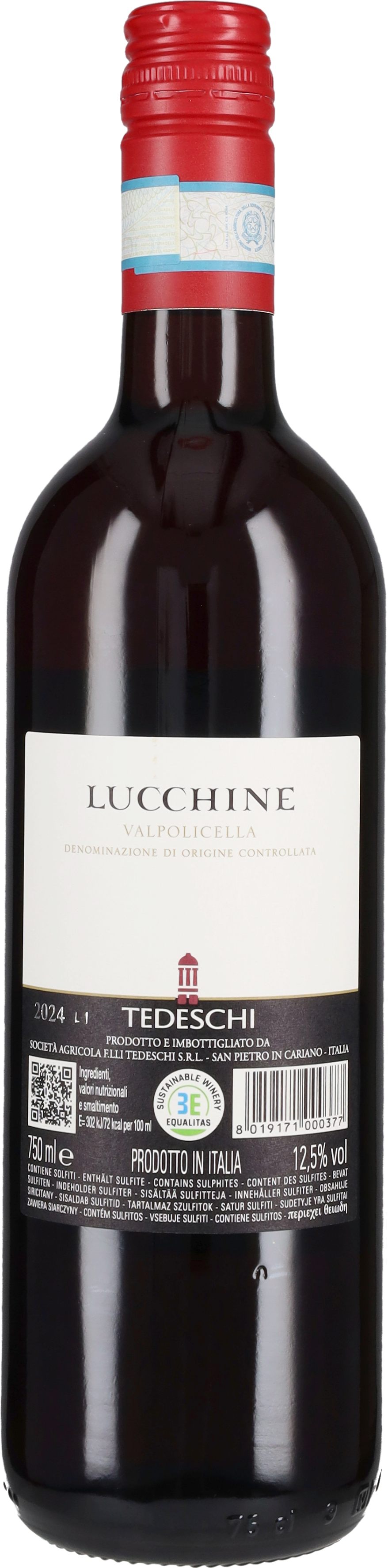
Valpolicella Classico 'Lucchine' Tedeschi 2024This red wine from Veneto "Lucchine" is a Valpolicella Classico signed by Tedeschi, originating from one of the most historic production areas of the entire Valpolicella terroir, that of the hills of Pedemonte. Here, the vines that give rise to this blend with a linear and straightforward sip grow, benefiting from a pleasant freshness on the palate. A label that achieves good scores both in national and foreign guides and that, moreover, also demonstrates an excellent gastronomic versatility at the table. The "Lucchine" Valpolicella Classico is made from a blend of indigenous red grape varieties from the area, including Corvina, Corvinone, Rondinella, Molinara, Rossignola, Negrara, and Dindarella. The vines of these different varieties, which are around 25 years old, grow using the pergoletta trentina system in the Lucchine vineyard, which gives its name to the label, located at the foot of the hills of Pedemonte. The bunches, after harvesting, are destemmed and the berries continue the production process towards pressing. The must obtained ferments in stainless steel containers, where it remains to stabilize for two months, until the Tedeschi team is ready to start the bottling procedures. The Valpolicella Classico "Lucchine" reveals itself to the eye with a typically ruby, bright, and shiny color. The bouquet of aromas that envelops the nose tells of subtle and refined notes, where the fruit alternates with nuances that reveal a more spiced soul at the finish. On the palate, it has a light body, characterized by a sip marked by a pleasant freshness and a fruity taste. A bottle signed by the Tedeschi winery, ideal for everyday consumption, considering the interesting relationship between the expressed quality and the final price.12,00 £*Shipping: 48,00 £Secure redirect to the provider


-
Why is it souhaite-t-il and not souhaite-s-il?
In French, the pronoun "il" (he) is combined with the verb "souhaiter" (to wish) to form the phrase "souhaite-t-il" because of the rule of verb inversion in interrogative sentences. When forming a question in French, the subject pronoun and the verb are inverted, so "souhaite-t-il" follows this rule. The "t" is added to create a liaison between the verb and the pronoun, making the pronunciation smoother. **
-
What are your tips for the German Classico?
To enjoy the German Classico, make sure to immerse yourself in the rich history and intense rivalry between Bayern Munich and Borussia Dortmund. Learn about the key players on both teams and their playing styles to appreciate the tactical battle on the field. Additionally, try to watch the match with friends or fellow fans to enhance the experience with lively discussions and friendly banter. Lastly, don't forget to savor the passion and excitement of one of the most anticipated matches in German football. **
-
What is an El, Sl, and Il?
An El, Sl, and Il are all suffixes used in the English language to form adjectives. "El" is used to form adjectives that mean "pertaining to" or "characterized by," such as in the word "musical." "Sl" is used to form adjectives that mean "tending to" or "inclined to," such as in the word "careful." "Il" is used to form adjectives that mean "having the nature of" or "capable of," such as in the word "flexible." These suffixes help to create new adjectives by modifying the meaning of the base word. **
-
How does "il faut" work in French?
"Il faut" is a common expression in French that is used to convey the idea of necessity or obligation. It is followed by an infinitive verb and is used to express what needs to be done or what is necessary in a given situation. For example, "Il faut manger" means "It is necessary to eat." This expression is used to give advice, make suggestions, or express general truths. **


What comes after il faudrait in French?
In French, "il faudrait" is followed by the infinitive form of a verb. This construction is used to express a suggestion or a polite request. For example, "il faudrait partir tôt" means "it would be necessary to leave early." **
What is your opinion of Kim Il Sung?
As an AI language model, I do not have personal opinions. However, I can provide information on Kim Il Sung. Kim Il Sung was the founding leader of North Korea and is revered as the country's eternal president. He is credited with leading the country's struggle for independence from Japanese colonial rule and establishing the regime that still governs North Korea today. However, his leadership is also associated with a cult of personality and a repressive regime that has been criticized for human rights abuses and isolationism. **
Top-Angebote
Products related to Valpolicella-Classico-Il-Sasso:
-
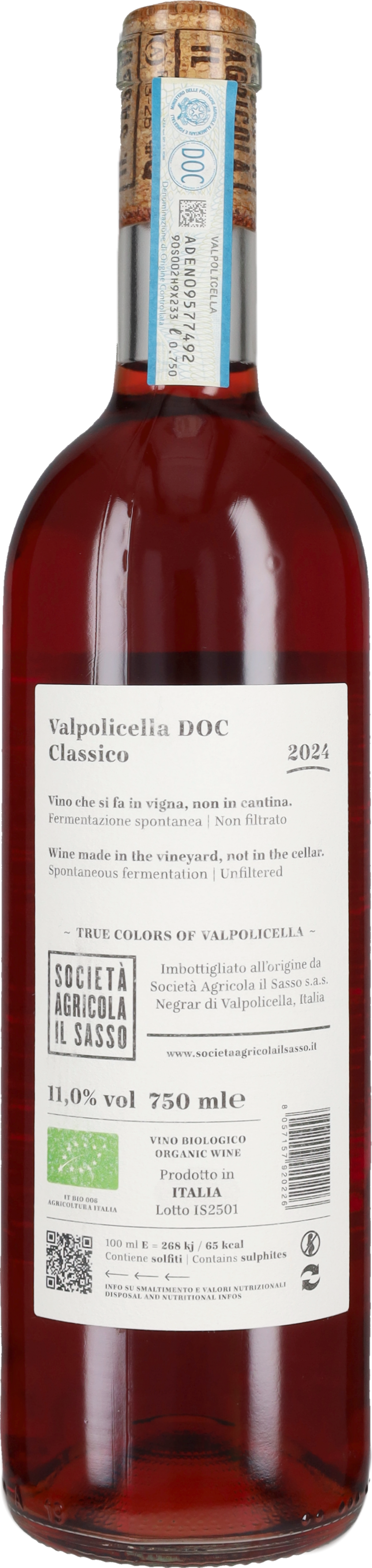
Valpolicella Classico Il Sasso 2024Il Valpolicella Classico della società agricola Il Sasso è un rosso tipico di questa nota zona enologica veneta realizzato a partire da un assemblaggio di uve autoctone quali Corvina, Corvinone e Rondinella. Si distingue fin da subito da altre etichette della zona come un’espressione unica e volutamente lontana dagli standard organolettici della denominazione, giocata al 100% su leggerezza e bevibilità. Un’interpretazione di Valpolicella più vera e diretta, come ama definirla Stefano Bellamoli, il vigneron di casa. La società agricola Il Sasso produce questo Valpolicella Classico a sud di Negrar, nel cuore della zona classica della denominazione, a 300 metri di altitudine su terreni aspri ricchi di calcarenite gialla, una roccia sedimentaria simile al tufo, di colore giallo e ricca di fossili marini. In vigna la viticoltura è sostenibile “l’unica agricoltura possibile” secondo Stefano che ritroviamo in etichetta contraddistinta dalla certificazione biologica. In cantina non si ricorre ad alcun tipo di trucchetto enologico, la fermentazione è spontanea a partire da lieviti indigeni e ha luogo in piccoli tini di acciaio, dove il vino sosta fino a Primavera prima dell’imbottigliamento. Il Valpolicella Classico di Il Sasso è un ritratto atipico di Valpolicella fin dal colore che si mostra rosso scarico nel bicchiere con riflessi quasi rosati. Al naso è molto profumato e leggiadro, caratterizzato da note di piccoli frutti rossi, fiori freschi ed erbe spontanee mentre in bocca è dritto, succoso, asciutto con tannini molto controllati. Ottimo da bere appena fresco all’ora dell’aperitivo in abbinata a un bel tagliere di salumi e di formaggi freschi. Pronti a scoprire insieme a Stefano de Il Sasso il nuovo volto, agile e beverino, della Valpolicella Classica?19,00 £*Shipping: 48,00 £Secure redirect to the provider
-
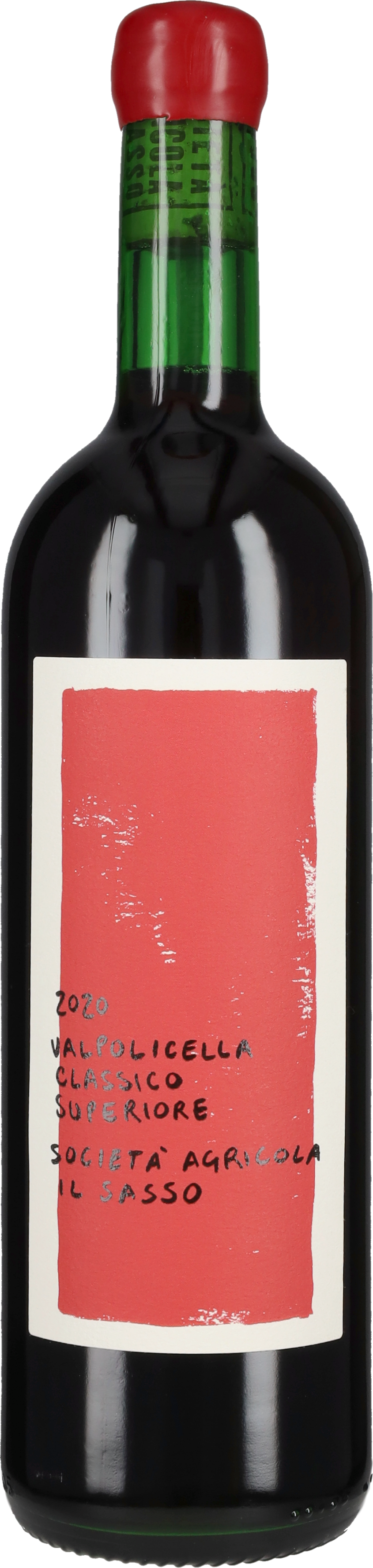
Valpolicella Classico Superiore Il Sasso 2020The Valpolicella Classico Superiore from the Veronese winery Il Sasso is a pure and sincere interpretation of the area. This young production reality, located in Montericco Negrar, a few kilometers north of Verona, manages about ten hectares of organic vineyards, with an agronomic approach aimed at promoting biodiversity and soil vitality. The term “Classico” identifies the historically most vocated area of the denomination, while the mention “Superiore” identifies a higher alcohol content compared to the minimum requirement established by the regulations for normal Valpolicella. Il Sasso Valpolicella Classico Superiore comes from a blend of the indigenous grape varieties Corvina, Corvinone, and Rondinella. The vineyards are located south of Negrar, at an altitude of 300 meters, on harsh soils with yellow calcarenite, a yellow sedimentary rock similar to tuff and rich in marine fossils. After harvesting and careful selection, the bunches are laid to rest for about a week in small crates and, in the meantime, a pied de cuve is prepared to start the alcoholic fermentation with only indigenous yeasts. The maceration on the skins lasts for about a month and the mass is then transferred to steel and concrete tanks for maturation for 12 months. Finally, the wine, without undergoing invasive filtration, is bottled, where it rests for at least another 6 months before release. To the eye, the red Valpolicella Classico Superiore Il Sasso presents a ruby red hue. The aromas on the nose range from notes of cherry, sour cherry, woodland spices, and underbrush, to pleasant wine sensations. On the palate, it is juicy and fragrant, fresh and with great territorial adherence. An artisanal label capable of seducing with its pronounced typicity and versatility in pairings.Cuve to initiate alcoholic fermentation with only indigenous yeasts. The maceration on the skins lasts for about a month and the mass is then transferred to steel and concrete tanks for 12 months of maturation. Finally, the wine, without undergoing invasive filtration, is bottled, where it rests for at least another 6 months before release. In appearance, the Valpolicella Classico Superiore Il Sasso shows a ruby red color. The aromas on the nose range from notes of cherry, sour cherry, woodland spices, and underbrush, to pleasant wine sensations. On the palate, it is juicy and fragrant, fresh and with great territorial adherence. An artisanal label capable of seducing with its marked typicity and versatility in pairings.25,00 £*Shipping: 48,00 £Secure redirect to the provider
-
Valpolicella Classico Viviani 2023The Valpolicella Classico by Viviani expresses the most youthful, versatile, straightforward, and fragrant character of the territory: an exceptional blend of modernity and territorial adherence. The tasting is indeed young and smooth, with a crunchy and easy-drinking sip, resulting from the processing carried out exclusively in steel of the indigenous grapes. It is a label that pairs perfectly with Mediterranean cuisine recipes, first courses, cold cuts, white meats, and even with flavorful fish dishes. It is the everyday red par excellence: simple and immediate but capable of delivering great satisfaction at the table, accompanying home cooking. This Valpolicella Classico Viviani originates from a blend of indigenous red grape varieties, where, alongside 70% Corvina Veronese, we find 30% Rondinella. The must obtained from the soft pressing of the grapes ferments spontaneously in steel containers thanks to the action of indigenous yeasts, in respect of the most authentic peasant traditions. The wine remains in steel to mature until February, and then further refines for two months directly in glass, after bottling. The Viviani Valpolicella Classico develops in the glass with a typically ruby color, crossed by light violet veins, evident at the rim. The nose is filled with fine and subtle aromas, announced with elegant fruity and spicy touches, enriched also by nuances of aromatic herbs. On the palate, it is easy-drinking, with a tasty and satisfying sip, relying on a tannic structure finely integrated into the overall structure. A Veneto red that, with this vintage, satisfies the main critics in the sector, not just Italian: considering the advantageous price, not tasting it would be a shame.9,00 £*Shipping: 48,00 £Secure redirect to the provider
-
What is the difference between il faut que and il faut?
"Il faut" is used to express a general necessity or obligation, while "il faut que" is used to introduce a specific action or event that is necessary or required. For example, "il faut manger" means "it is necessary to eat" in a general sense, while "il faut que tu manges" means "you need to eat" in a specific sense. "Il faut" is used to make a general statement about what is necessary, while "il faut que" is used to specify what needs to be done. **
-
When do you use il faut and il ne faut pas?
"Il faut" is used to express what is necessary or required, while "il ne faut pas" is used to express what is not allowed or should be avoided. For example, you would use "il faut" to say "il faut étudier pour réussir" (it is necessary to study to succeed), and "il ne faut pas" to say "il ne faut pas fumer dans ce lieu" (smoking is not allowed in this place). These expressions are used to give advice, make recommendations, or set rules. **
-
Why is it souhaite-t-il and not souhaite-s-il?
In French, the pronoun "il" (he) is combined with the verb "souhaiter" (to wish) to form the phrase "souhaite-t-il" because of the rule of verb inversion in interrogative sentences. When forming a question in French, the subject pronoun and the verb are inverted, so "souhaite-t-il" follows this rule. The "t" is added to create a liaison between the verb and the pronoun, making the pronunciation smoother. **
-
What are your tips for the German Classico?
To enjoy the German Classico, make sure to immerse yourself in the rich history and intense rivalry between Bayern Munich and Borussia Dortmund. Learn about the key players on both teams and their playing styles to appreciate the tactical battle on the field. Additionally, try to watch the match with friends or fellow fans to enhance the experience with lively discussions and friendly banter. Lastly, don't forget to savor the passion and excitement of one of the most anticipated matches in German football. **
Similar search terms for Valpolicella-Classico-Il-Sasso
-
Valpolicella Classico Speri 2025The Valpolicella Classico is the simplest wine with which the Speri winery tells us about the different facets of the Valpolicella terroir. In this label, fresh and light sensations dominate both on the nose and on the palate, enhanced by the choice made during vinification and aging, where only steel and vitrified cement are used, leaving wood aside. A bottle with a immediate profile, appealing also thanks to the final price at which it is offered, truly encouraging for those who want to start getting to know the Venetian reds. This Valpolicella Classico is born from a blend of indigenous red grape varieties from the Veneto region, specifically Corvina Veronese, Rondinella, and Molinara. These three varieties are cultivated by Speri using the traditional pergola system, in plots located near the municipalities of San Pietro in Cariano, Fumane, and Negrar. The must ferments in steel tanks at a constantly monitored temperature, while the subsequent malolactic fermentation takes place in vitrified cement tanks. It then matures in cement for a few months, until the bottling procedures begin. The Veneto wine Valpolicella Classico produced by the Speri winery presents itself to the eye with a beautiful ruby red color, crossed by slight more violet reflections, especially evident at the rim. The nose is winey, with aromas reminiscent of wildflowers and aromatic herbs, enriched in the finish by more balsamic and spicy notes. On the palate, it has a linear and clear entry, characterized by a fresh sip; it ends with an aftertaste marked by an almond flavor. A label that preserves the most immediate traits of the land from which it comes, perfect for accompanying culinary recipes of the Mediterranean tradition.12,00 £*Shipping: 48,00 £Secure redirect to the provider
-
Valpolicella Classico 'Lucchine' Tedeschi 2024This red wine from Veneto "Lucchine" is a Valpolicella Classico signed by Tedeschi, originating from one of the most historic production areas of the entire Valpolicella terroir, that of the hills of Pedemonte. Here, the vines that give rise to this blend with a linear and straightforward sip grow, benefiting from a pleasant freshness on the palate. A label that achieves good scores both in national and foreign guides and that, moreover, also demonstrates an excellent gastronomic versatility at the table. The "Lucchine" Valpolicella Classico is made from a blend of indigenous red grape varieties from the area, including Corvina, Corvinone, Rondinella, Molinara, Rossignola, Negrara, and Dindarella. The vines of these different varieties, which are around 25 years old, grow using the pergoletta trentina system in the Lucchine vineyard, which gives its name to the label, located at the foot of the hills of Pedemonte. The bunches, after harvesting, are destemmed and the berries continue the production process towards pressing. The must obtained ferments in stainless steel containers, where it remains to stabilize for two months, until the Tedeschi team is ready to start the bottling procedures. The Valpolicella Classico "Lucchine" reveals itself to the eye with a typically ruby, bright, and shiny color. The bouquet of aromas that envelops the nose tells of subtle and refined notes, where the fruit alternates with nuances that reveal a more spiced soul at the finish. On the palate, it has a light body, characterized by a sip marked by a pleasant freshness and a fruity taste. A bottle signed by the Tedeschi winery, ideal for everyday consumption, considering the interesting relationship between the expressed quality and the final price.12,00 £*Shipping: 48,00 £Secure redirect to the provider
-
Valpolicella Classico 'Caleselle' Santi 2023The Valpolicella Classico ‘Caleselle’ from the renowned Venetian winery Santi is a red wine that stands out for its aromas of ripe berries and flowers. The Santi winery is located in the picturesque medieval village of Illasi, situated on the eastern side of the Valpolicella region, where for nearly two centuries the estate has been producing wines that reflect the local terroir. Among the wines crafted by Santi, the ‘Caleselle’ is made from grapes grown in select vineyards and processed using a modern approach that respects Verona's winemaking tradition. In this context, vinification is carried out with whole clusters, a technique aimed at achieving greater aromatic and flavor intensity. Santi Valpolicella Classico ‘Caleselle’ originates from a blend of Corvina and Rondinella grapes grown on calcareous soils with a predominantly clay texture, located in the municipalities of Grezzana and Verona. The altitude ranges from 150 to 300 meters above sea level with a southwest exposure. The harvest is done by hand in early October, and the whole clusters are then vinified with alcoholic fermentation taking place in temperature-controlled stainless steel fermenters, accompanied by 15 days of contact between the must and the skins. The subsequent maturation phase lasts about 3 months in cement tanks, and after a few more months of resting in the bottle, the wine is finally ready for release on the market. The Santi ‘Caleselle’ Valpolicella Classico has an intense carmine red hue. Interesting notes of ripe cherry, red currant, and violet petals characterize the aromatic profile. The palate progression is harmonious and dry, balanced between the soft body and pleasant freshness, with a good structure contributing to the persistent fruity finish.12,00 £*Shipping: 48,00 £Secure redirect to the provider
-
Valpolicella Classico Superiore Zenato 2021Zenato's Valpolicella Classico Superiore represents a typical and tasty interpretation of this popular appellation from the province of Verona. This extensive winery in the Veneto region, founded in 1960 by Sergio Zenato, now has nearly 100 hectares of vineyards distributed between the Santa Cristina Estate in Peschiera and the Costalunga Estate in Valpolicella, from which the Zenato family derives a wide-ranging production characterized by very high levels of quality. Zenato Valpolicella Classico Superiore consists of a blend of Corvina Veronese (85 percent), Rondinella (10 percent) and Corvinone (5 percent), varieties are grown on the hills of Valpolicella with southeast and southwest exposure, between 250 and 300 meters above sea level. The soils, belonging mainly to the Cretaceous geological period, are characterized by an abundant presence of limestone and skeleton. Following manual harvesting, the grapes are destemmed and crushed, with subsequent alcoholic fermentation taking place in stainless steel tanks associated with 7-10 days of maceration on the skins. Once the fermentation process is complete, the mass is transferred to Slavonian oak tonneaux for maturation for about a year prior to bottling. Valpolicella Classico Superiore from the Zenato winery possesses a deep ruby red hue with faint garnet reflections. Hints of jammy black cherry, wild berries and morello cherry emerge on the nose, combined with slightly herbaceous perceptions, pleasant mentholated hints and hints of sweet spices. Elegant and smooth palate, endowed with good structure and balanced fresh-savoury component. The velvety and refined tannic texture guides the consistent closure in fruity and balsamic sensations.19,00 £*Shipping: 48,00 £Secure redirect to the provider
-
What is an El, Sl, and Il?
An El, Sl, and Il are all suffixes used in the English language to form adjectives. "El" is used to form adjectives that mean "pertaining to" or "characterized by," such as in the word "musical." "Sl" is used to form adjectives that mean "tending to" or "inclined to," such as in the word "careful." "Il" is used to form adjectives that mean "having the nature of" or "capable of," such as in the word "flexible." These suffixes help to create new adjectives by modifying the meaning of the base word. **
-
How does "il faut" work in French?
"Il faut" is a common expression in French that is used to convey the idea of necessity or obligation. It is followed by an infinitive verb and is used to express what needs to be done or what is necessary in a given situation. For example, "Il faut manger" means "It is necessary to eat." This expression is used to give advice, make suggestions, or express general truths. **
-
What comes after il faudrait in French?
In French, "il faudrait" is followed by the infinitive form of a verb. This construction is used to express a suggestion or a polite request. For example, "il faudrait partir tôt" means "it would be necessary to leave early." **
-
What is your opinion of Kim Il Sung?
As an AI language model, I do not have personal opinions. However, I can provide information on Kim Il Sung. Kim Il Sung was the founding leader of North Korea and is revered as the country's eternal president. He is credited with leading the country's struggle for independence from Japanese colonial rule and establishing the regime that still governs North Korea today. However, his leadership is also associated with a cult of personality and a repressive regime that has been criticized for human rights abuses and isolationism. **
* All prices are inclusive of VAT and, if applicable, plus shipping costs. The offer information is based on the details provided by the respective shop and is updated through automated processes. Real-time updates do not occur, so deviations can occur in individual cases. ** Note: Parts of this content were created by AI.