Buy sportcoach.eu ?
We are moving the project
sportcoach.eu .
Are you interested in purchasing the domain
sportcoach.eu ?
domain@kv-gmbh.de · 0541-91531010
Buy sportcoach.eu ?
What are conjunctional clauses, relative clauses, demonstrative clauses, and infinitive clauses?
Conjunctional clauses are dependent clauses that are introduced by a conjunction, such as "because," "although," or "while." They provide additional information about the main clause in a sentence. Relative clauses are also dependent clauses that provide more information about a noun in the main clause. They are introduced by relative pronouns like "who," "which," or "that." Demonstrative clauses are dependent clauses that function as adjectives and provide more information about a noun in the main clause. They are introduced by demonstrative pronouns like "this," "that," "these," or "those." Infinitive clauses are dependent clauses that are formed with an infinitive verb (to + base form of the verb). They can function as nouns, adjectives, or adverbs in a sentence. **
Are conjunctive clauses always adverbial clauses?
No, conjunctive clauses are not always adverbial clauses. While adverbial clauses are a type of conjunctive clause that function as adverbs to modify verbs, adjectives, or other adverbs, there are also other types of conjunctive clauses. For example, there are conjunctive clauses that function as noun clauses, such as in "I know that you are busy." In this sentence, "that you are busy" is a conjunctive clause functioning as a noun clause, not an adverbial clause. Therefore, conjunctive clauses can serve various grammatical functions beyond just adverbial clauses. **


Similar search terms for Clauses
Top-Angebote
Products related to Clauses:
-
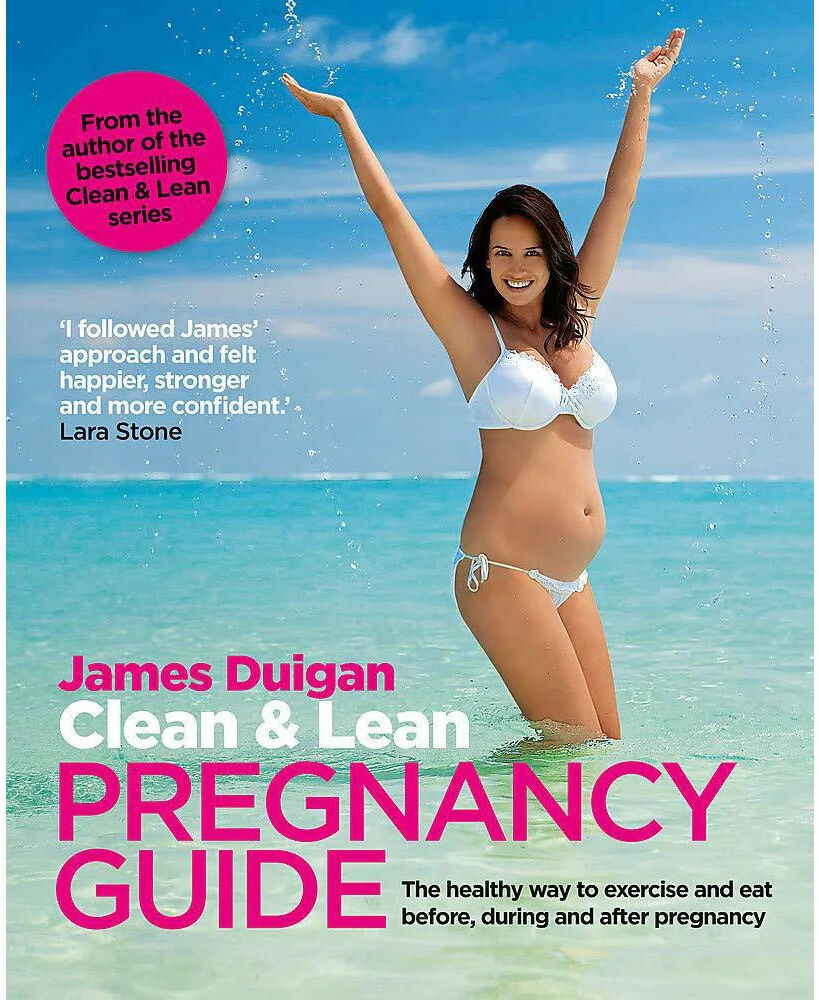
Kyle Books Clean & Lean Pregnancy Guide by James Duigan - Paperback Wellness Book - Fertility, Pregnancy & Post-Natal Exercise & Nutrition GuideThe Clean and Lean Pregnancy Guide by James Duigan is a health and wellness book that applies his popular Clean and Lean philosophy to the journey of becoming a mother. Covering fertility, pregnancy, and the post-natal period, this paperback guide offers gentle, trimester-appropriate exercises and straightforward eating advice for every stage. Written with warmth and drawn from Duigan's own experience as a first-time parent, it is designed to help expectant mothers feel strong, calm, and well-supported from bump to baby and beyond. The book includes a foreword by model Lara Stone and is published by Kyle Books.2,99 £*Shipping: 2,99 £Secure redirect to the provider
-
Nourish Books Training Food by Renee McGregor - Sports Nutrition Recipe Book - Paperback - Fuel Your Training Before, During & After ExerciseTraining Food: Get the Fuel You Need to Achieve Your Goals is a practical sports nutrition guide from registered dietitian and sports nutritionist Renee McGregor. Written for runners, cyclists, triathletes, swimmers, and team-sport players of every level, it combines accessible science with real, everyday recipes so athletes can fuel training, protect against injury, and recover properly without giving up on taste, variety, or a normal social life around food. The book is split into two clear parts. Part One breaks down the science of sports nutrition in plain English, covering fuelling basics, how training itself demands different nutritional strategies, how needs vary by sport, and how to troubleshoot common issues such as runner's knee or tennis elbow through diet. Part Two turns that science into action with a full set of recipes to help athletes achieve their goals.8,49 £*Shipping: 2,99 £Secure redirect to the provider
-
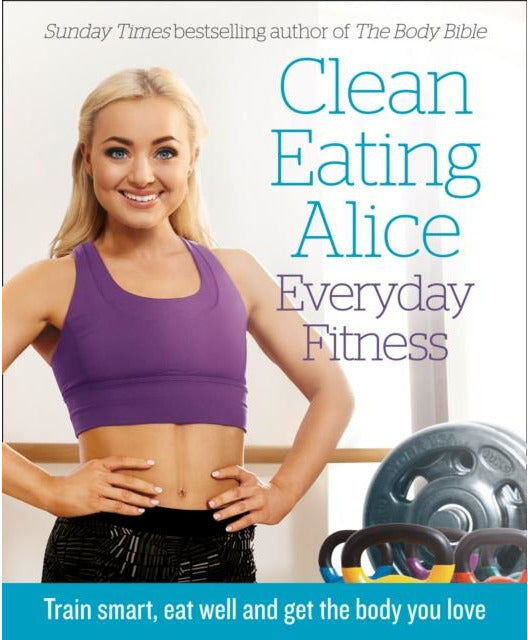
HARPERCOLLINS Clean Eating Alice: Everyday Fitness – Healthy Recipes & Practical Workout Guide for Everyday Wellness by Alice Liveing – Workout & Nutrition GuideTransform your approach to health and fitness with Clean Eating Alice Everyday Fitness: Train Smart, Eat Well and Get the Body You Love by Alice Liveing. This practical, motivating guide combines smart training principles with balanced nutrition to help readers build strength, confidence, and sustainable healthy habits. Alice Liveing shares structured workout plans, approachable meal ideas, and realistic lifestyle advice designed to fit everyday routines — no extremes or quick fixes required. Focused on long-term wellbeing rather than short-term dieting, the book empowers readers to develop a positive relationship with food and exercise while working toward personal fitness goals. Whether you’re new to training or refining your routine, this guide offers clear, supportive direction for lasting results. Why Readers Love This Book: Structured fitness training plans for real-life schedules Balanced nutrition guidance — no fad dieting Encourages sustainable, long-term habits Motivational, beginner-friendly tone Ideal for home or gym-based workouts A smart, accessible roadmap to healthier living, Clean Eating Alice Everyday Fitness helps readers feel strong, energized, and confident.2,80 £*Shipping: 1,99 £Secure redirect to the provider
-
Healfit Counter Adjustable Finger Exercise Training Thruster Finger, Hand Resistance Band, Strength & Recovery blackUnlock Your Hand's True Potential Today Are weak fingers holding you back from peak performance in sports, music, or daily life Our professionalgrade Silicone Finger Stretching Exerciser is the gamechanging tool you need. Designed for maximum...21,97 $*Shipping: 0,00 $Secure redirect to the provider


-
What are relative clauses and conjunctional clauses?
Relative clauses are clauses that provide additional information about a noun in the main clause. They are introduced by relative pronouns such as "who," "which," "that," and "whom." For example, in the sentence "The book that I read is very interesting," the relative clause "that I read" provides more information about the noun "book." Conjunctional clauses, on the other hand, are clauses that are connected to the main clause by conjunctions such as "and," "but," "or," "if," and "because." They can express relationships such as addition, contrast, alternative, condition, and cause. For example, in the sentence "I will go to the park if the weather is nice," the conjunctional clause "if the weather is nice" expresses a condition for the action in the main clause. **
-
What are the French conditional clauses (si-clauses)?
French conditional clauses, also known as si-clauses, are used to express a hypothetical situation and its potential outcome. They consist of two parts: the si clause (if clause), which describes the condition, and the main clause, which describes the potential result. The si clause is typically formed using the conjunction "si" followed by the imperfect tense or the pluperfect tense, while the main clause is formed using the conditional tense. These clauses are commonly used to talk about what would happen in certain situations if a specific condition were met. **
-
How can subordinate clauses be rewritten as main clauses?
Subordinate clauses can be rewritten as main clauses by removing the subordinating conjunction and making any necessary adjustments to the verb tense or word order. For example, the subordinate clause "because she was tired" can be rewritten as the main clause "she was tired." This transformation allows the subordinate clause to stand alone as a complete sentence. Additionally, any pronouns or other words that were dependent on the subordinating conjunction may need to be adjusted to ensure the new main clause is grammatically correct. **
-
How can one recognize main clauses and subordinate clauses?
Main clauses can stand alone as complete sentences, while subordinate clauses cannot. Subordinate clauses often begin with subordinating conjunctions such as "although," "because," "if," "when," or "while." They also often contain a subject and a verb, but they do not express a complete thought on their own. Main clauses, on the other hand, express a complete thought and can function as independent sentences. By identifying these characteristics, one can recognize main and subordinate clauses in a sentence. **

How can adverbial clauses be used as subordinate clauses?
Adverbial clauses can be used as subordinate clauses to provide additional information about the main clause. They can modify the verb in the main clause by expressing time, place, manner, condition, reason, purpose, or concession. For example, in the sentence "She went to bed after she finished her homework," the adverbial clause "after she finished her homework" provides information about the timing of the main action "She went to bed." Adverbial clauses are introduced by subordinating conjunctions such as after, before, while, since, because, if, although, etc. **
How can main clauses and subordinate clauses be recognized?
Main clauses can be recognized by their ability to stand alone as complete sentences, containing a subject and a predicate. Subordinate clauses, on the other hand, cannot stand alone as complete sentences and are dependent on the main clause for their meaning. They often begin with subordinating conjunctions such as "because," "although," "while," or "if." Additionally, subordinate clauses often function as adverbial, adjectival, or nominal clauses, providing additional information about the main clause. **
Top-Angebote
Products related to Clauses:
-
Enesco/Dept 56 More Letters for the Clauses Clothtique Red , RedEvery year, Mr. and Mrs. Claus are eager to receive and read More Letters for the Clauses. The red mailbox has holiday accents including holly leaves, red berries, and a red bow; it is filled with wrapped packages and rolled-up letters. This happy...149,99 $*Shipping: 20,95 $Secure redirect to the provider
-
Enesco/Dept 56 More Letters for the Clauses African American Clothtique Red , RedEvery year, Mr. and Mrs. Claus are eager to receive and read More Letters for the Clauses. The red mailbox has holiday accents including holly leaves, red berries, and a red bow; it is filled with wrapped packages and rolled-up letters. This happy,...149,99 $*Shipping: 20,95 $Secure redirect to the provider
-
Kyle Books Clean & Lean Pregnancy Guide by James Duigan - Paperback Wellness Book - Fertility, Pregnancy & Post-Natal Exercise & Nutrition GuideThe Clean and Lean Pregnancy Guide by James Duigan is a health and wellness book that applies his popular Clean and Lean philosophy to the journey of becoming a mother. Covering fertility, pregnancy, and the post-natal period, this paperback guide offers gentle, trimester-appropriate exercises and straightforward eating advice for every stage. Written with warmth and drawn from Duigan's own experience as a first-time parent, it is designed to help expectant mothers feel strong, calm, and well-supported from bump to baby and beyond. The book includes a foreword by model Lara Stone and is published by Kyle Books.2,99 £*Shipping: 2,99 £Secure redirect to the provider
-
Nourish Books Training Food by Renee McGregor - Sports Nutrition Recipe Book - Paperback - Fuel Your Training Before, During & After ExerciseTraining Food: Get the Fuel You Need to Achieve Your Goals is a practical sports nutrition guide from registered dietitian and sports nutritionist Renee McGregor. Written for runners, cyclists, triathletes, swimmers, and team-sport players of every level, it combines accessible science with real, everyday recipes so athletes can fuel training, protect against injury, and recover properly without giving up on taste, variety, or a normal social life around food. The book is split into two clear parts. Part One breaks down the science of sports nutrition in plain English, covering fuelling basics, how training itself demands different nutritional strategies, how needs vary by sport, and how to troubleshoot common issues such as runner's knee or tennis elbow through diet. Part Two turns that science into action with a full set of recipes to help athletes achieve their goals.8,49 £*Shipping: 2,99 £Secure redirect to the provider
-
What are conjunctional clauses, relative clauses, demonstrative clauses, and infinitive clauses?
Conjunctional clauses are dependent clauses that are introduced by a conjunction, such as "because," "although," or "while." They provide additional information about the main clause in a sentence. Relative clauses are also dependent clauses that provide more information about a noun in the main clause. They are introduced by relative pronouns like "who," "which," or "that." Demonstrative clauses are dependent clauses that function as adjectives and provide more information about a noun in the main clause. They are introduced by demonstrative pronouns like "this," "that," "these," or "those." Infinitive clauses are dependent clauses that are formed with an infinitive verb (to + base form of the verb). They can function as nouns, adjectives, or adverbs in a sentence. **
-
Are conjunctive clauses always adverbial clauses?
No, conjunctive clauses are not always adverbial clauses. While adverbial clauses are a type of conjunctive clause that function as adverbs to modify verbs, adjectives, or other adverbs, there are also other types of conjunctive clauses. For example, there are conjunctive clauses that function as noun clauses, such as in "I know that you are busy." In this sentence, "that you are busy" is a conjunctive clause functioning as a noun clause, not an adverbial clause. Therefore, conjunctive clauses can serve various grammatical functions beyond just adverbial clauses. **
-
What are relative clauses and conjunctional clauses?
Relative clauses are clauses that provide additional information about a noun in the main clause. They are introduced by relative pronouns such as "who," "which," "that," and "whom." For example, in the sentence "The book that I read is very interesting," the relative clause "that I read" provides more information about the noun "book." Conjunctional clauses, on the other hand, are clauses that are connected to the main clause by conjunctions such as "and," "but," "or," "if," and "because." They can express relationships such as addition, contrast, alternative, condition, and cause. For example, in the sentence "I will go to the park if the weather is nice," the conjunctional clause "if the weather is nice" expresses a condition for the action in the main clause. **
-
What are the French conditional clauses (si-clauses)?
French conditional clauses, also known as si-clauses, are used to express a hypothetical situation and its potential outcome. They consist of two parts: the si clause (if clause), which describes the condition, and the main clause, which describes the potential result. The si clause is typically formed using the conjunction "si" followed by the imperfect tense or the pluperfect tense, while the main clause is formed using the conditional tense. These clauses are commonly used to talk about what would happen in certain situations if a specific condition were met. **
Similar search terms for Clauses
-
HARPERCOLLINS Clean Eating Alice: Everyday Fitness – Healthy Recipes & Practical Workout Guide for Everyday Wellness by Alice Liveing – Workout & Nutrition GuideTransform your approach to health and fitness with Clean Eating Alice Everyday Fitness: Train Smart, Eat Well and Get the Body You Love by Alice Liveing. This practical, motivating guide combines smart training principles with balanced nutrition to help readers build strength, confidence, and sustainable healthy habits. Alice Liveing shares structured workout plans, approachable meal ideas, and realistic lifestyle advice designed to fit everyday routines — no extremes or quick fixes required. Focused on long-term wellbeing rather than short-term dieting, the book empowers readers to develop a positive relationship with food and exercise while working toward personal fitness goals. Whether you’re new to training or refining your routine, this guide offers clear, supportive direction for lasting results. Why Readers Love This Book: Structured fitness training plans for real-life schedules Balanced nutrition guidance — no fad dieting Encourages sustainable, long-term habits Motivational, beginner-friendly tone Ideal for home or gym-based workouts A smart, accessible roadmap to healthier living, Clean Eating Alice Everyday Fitness helps readers feel strong, energized, and confident.2,80 £*Shipping: 1,99 £Secure redirect to the provider
-
Healfit Counter Adjustable Finger Exercise Training Thruster Finger, Hand Resistance Band, Strength & Recovery blackUnlock Your Hand's True Potential Today Are weak fingers holding you back from peak performance in sports, music, or daily life Our professionalgrade Silicone Finger Stretching Exerciser is the gamechanging tool you need. Designed for maximum...21,97 $*Shipping: 0,00 $Secure redirect to the provider
-
Anima The Wellness Rebel by Plantbased Pixie - Hardback Nutrition & Wellness Book - Evidence-Based Myth-Busting Guide to Healthy EatingThe Wellness Rebel by Plantbased Pixie is a non-fiction hardback book that offers an evidence-based approach to the wellness industry. Written by a food blogger and qualified nutritionist, it cuts through myths and misconceptions with science, wit, and warmth. The book champions balance and debunks fads like alkaline diets, raw food dogma, and superfood hype, while providing practical and sustainable ways to enjoy food without guilt, fear, or misinformation. Published by Anima (Head of Zeus), this book is suitable for adults and provides a much-needed perspective on what 'healthy' eating really means.9,49 £*Shipping: 2,99 £Secure redirect to the provider
-
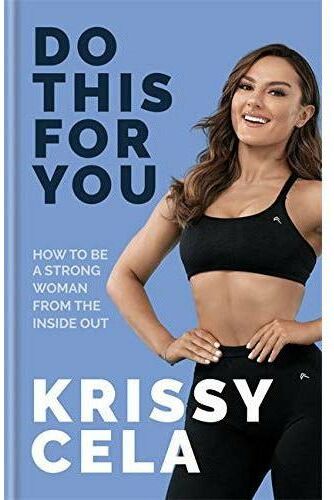
Aster Krissy Cela, Do This for You Book (Fitness Book, Coaching Book)Krissy Cela, Do This for You Book (Fitness Book, Coaching Book) Instagram sensation Krissy Cela is the one-woman revolution set to transform how you think about fitness. It's time to reassess your approach to getting fit! No more crazy self-punishment, 'miracle' diets or one-size-fits-all rules. Having changed the lives of millions of people through her no-nonsense, friendly and supportive coaching, Krissy Cela wants to show you that being healthy in body happens most effectively when you focus on the right mindset. Krissy will shift your thinking away from how you want to look to how you want to feel. Feeling confident and happy will always be more important than your dress size. Krissy will give you the tools to deal with mental barriers such as anxiety, stress and low self-esteem, which affect more of us than ever before. She will help you challenge negative thinking to help you build healthy habits that deliver long-lasting, realistic results. A balanced lifestyle will become as second nature to you as brushing your teeth, and you won't have to give up the food you love! Do This for You gives you everything you need to feel good in body and mind, every single day. Chapters include: 1. Find Your 'Why' 2. Lose the Excuses 3. Maximize Your Time 4. Form Healthy Habits 5. Shift Your Perspective 6. Believe You Can 7. Find Your Tribe 8. Embrace the Fear 9. Be More Than Motivated 10. Build Your Strength 11. Love Your Food 12. Do This for You3,71 £*Shipping: 1,99 £Secure redirect to the provider
-
How can subordinate clauses be rewritten as main clauses?
Subordinate clauses can be rewritten as main clauses by removing the subordinating conjunction and making any necessary adjustments to the verb tense or word order. For example, the subordinate clause "because she was tired" can be rewritten as the main clause "she was tired." This transformation allows the subordinate clause to stand alone as a complete sentence. Additionally, any pronouns or other words that were dependent on the subordinating conjunction may need to be adjusted to ensure the new main clause is grammatically correct. **
-
How can one recognize main clauses and subordinate clauses?
Main clauses can stand alone as complete sentences, while subordinate clauses cannot. Subordinate clauses often begin with subordinating conjunctions such as "although," "because," "if," "when," or "while." They also often contain a subject and a verb, but they do not express a complete thought on their own. Main clauses, on the other hand, express a complete thought and can function as independent sentences. By identifying these characteristics, one can recognize main and subordinate clauses in a sentence. **
-
How can adverbial clauses be used as subordinate clauses?
Adverbial clauses can be used as subordinate clauses to provide additional information about the main clause. They can modify the verb in the main clause by expressing time, place, manner, condition, reason, purpose, or concession. For example, in the sentence "She went to bed after she finished her homework," the adverbial clause "after she finished her homework" provides information about the timing of the main action "She went to bed." Adverbial clauses are introduced by subordinating conjunctions such as after, before, while, since, because, if, although, etc. **
-
How can main clauses and subordinate clauses be recognized?
Main clauses can be recognized by their ability to stand alone as complete sentences, containing a subject and a predicate. Subordinate clauses, on the other hand, cannot stand alone as complete sentences and are dependent on the main clause for their meaning. They often begin with subordinating conjunctions such as "because," "although," "while," or "if." Additionally, subordinate clauses often function as adverbial, adjectival, or nominal clauses, providing additional information about the main clause. **
* All prices are inclusive of VAT and, if applicable, plus shipping costs. The offer information is based on the details provided by the respective shop and is updated through automated processes. Real-time updates do not occur, so deviations can occur in individual cases. ** Note: Parts of this content were created by AI.