Buy sportcoach.eu ?
We are moving the project
sportcoach.eu .
Are you interested in purchasing the domain
sportcoach.eu ?
domain@kv-gmbh.de · 0541-91531010
Buy sportcoach.eu ?
How do brake pad deposits form on the brake disc?
Brake pad deposits form on the brake disc when the brake pads generate excessive heat during braking. This heat can cause the brake pad material to transfer onto the surface of the brake disc, creating a layer of deposits. Factors such as aggressive driving, heavy braking, and using low-quality brake pads can contribute to the formation of these deposits. Over time, these deposits can lead to brake noise, vibration, and reduced braking performance, requiring the disc to be cleaned or replaced. Regular maintenance and using high-quality brake pads can help prevent the formation of brake pad deposits. **
What does glc brake pad warning mean?
The "glc brake pad warning" refers to a warning message or indicator light on a Mercedes-Benz GLC vehicle that alerts the driver to an issue with the brake pads. This warning typically indicates that the brake pads are worn and need to be replaced soon. It is important to address this warning promptly to ensure the safety and effectiveness of the vehicle's braking system. Ignoring this warning could lead to decreased braking performance and potential safety hazards. **

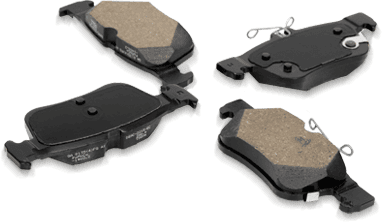
Similar search terms for VALEO-601000-Brake-pad
Top-Angebote
Products related to VALEO-601000-Brake-pad:
-
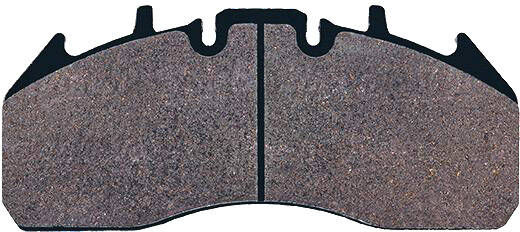
VALEO 882245 Brake pad setFitting Position: Front Axle, Rear Axle; Fitting Position: Rear Axle, 1st front axle, 1st rear axle, 2nd front axle, 2nd rear axle, Front Axle, non-steered trailing axle, steered trailing axle, steered leading axle, non-steered leading axle; Brake System: MERITOR; Supplementary Article / Supplementary Info Info 2: with bolts/screws; Width [mm]: 250; Wear Warning Contact: with integrated wear sensor, with integrated wear warning contact; Number of wear indicators [per axle]: 2; WVA Number: 29174, 29204, 29219, 29273, 29228; Weight [kg]: 11,188; Quantity Unit: Axle Set; Supplementary Info: OPTIPACK; Spring Type: for vehicles with air suspension; Version: 3, 4, 1, 2; Construction Year from: 07/2013; Axle: 1st drive axle, 2nd drive axle, for vehicles with steered leading axle; Construction Year to: 12/2023, 08/2023; Spring Design: Air Spring101,99 £*Shipping: 8,45 £Secure redirect to the provider
-
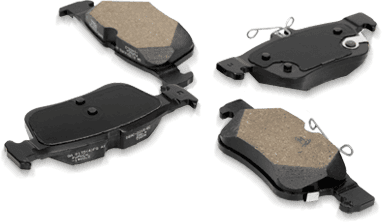
VALEO 301627A Brake pad setFitting Position: Front Axle; Brake System: AKEBONO; Supplementary Article / Supplementary Info Info 2: without bolts/screws, without anti-squeak plate; Width [mm]: 148,9; Height: 57,7; Thickness: 17,5; WVA Number: 21651, 21653; Wear Warning Contact: incl. wear warning contact; Number of wear indicators [per axle]: 2; Operating Mode: mechanical; Vibration: without vibration absorber; Test Mark: ECE-R90; Weight [kg]: 1,06; Construction Year from: 10/1993, 07/1994, 07/1993, 12/1994, 03/1996, 07/1997, 01/1997, 01/1998, 06/1998, 02/1998, 12/1999, 07/1989; Construction Year to: 06/2000, 02/1996, 09/1996, 08/1993, 06/1995, 09/1997, 12/1997, 06/1997, 06/2001, 08/1998, 10/2000, 06/2002, 09/2005, 09/2000, 12/1998, 09/199021,49 £*Shipping: 8,45 £Secure redirect to the provider
-
VALEO 301721A Brake pad setFitting Position: Front Axle; Brake System: BOSCH; Supplementary Article / Supplementary Info Info 2: with bolts/screws, with anti-squeak plate; Width [mm]: 138; Height: 58; Thickness: 19; WVA Number: 23709, 23708; Wear Warning Contact: incl. wear warning contact; Number of wear indicators [per axle]: 1; Operating Mode: Electric; Vibration: without vibration absorber; Test Mark: ECE-R90; Weight [kg]: 2,05; Construction Year to: 12/2014, 05/2011, 06/2004, 06/2003, 11/2013, 01/2011, 09/2005, 06/2007, 01/2012, 04/2011, 12/2008, 10/2011, 05/2010; Vehicle Identification Number (VIN) from: 2232223; for brake disc diameter [mm]: 284; for RPO code: J42; Construction Year from: 01/2009, 02/2004, 02/2006, 10/2007, 01/2006, 07/2004; Emissions Standard: Euro 5, Euro 4 (D4)20,99 £*Shipping: 8,45 £Secure redirect to the provider
-
VALEO 302907 Brake pad setFitting Position: Front Axle; Brake System: ADVICS; Supplementary Article / Supplementary Info Info 2: without bolts/screws, without anti-squeak plate; Width [mm]: 140; Height: 59; Thickness: 16; Wear Warning Contact: with integrated wear sensor, with acoustic wear warning; Test Mark: ECE-R90; WVA Number: 25725; FMSI Code: D1711-8936; Weight [kg]: 1,41; Construction Year from: 05/201519,49 £*Shipping: 8,45 £Secure redirect to the provider


-
Is there enough brake pad for the motorcycle?
To determine if there is enough brake pad for the motorcycle, you will need to visually inspect the brake pads. If the brake pads are worn down to the minimum thickness specified by the manufacturer, then they will need to be replaced. Additionally, if there are any signs of uneven wear, damage, or deterioration, the brake pads should also be replaced. It is important to ensure that the brake pads have enough material to effectively stop the motorcycle and prevent any potential safety hazards. **
-
Is the brake disc broken or was the brake pad responsible for it?
Without further inspection, it is difficult to determine whether the brake disc is broken or if the brake pad is responsible for the issue. Both components play a crucial role in the braking system, and either one could be the cause of the problem. It is recommended to have a professional mechanic inspect the brake system to accurately diagnose the issue and determine the necessary repairs. **
-
How does oil get on the brake pad of the bicycle disc brake?
Oil can get on the brake pad of a bicycle disc brake from a few different sources. One common way is through contamination from the chain or other bike components that have oil or lubricant on them. Additionally, if the bike is being worked on and oil is accidentally spilled or dripped onto the brake pad, it can also cause oil to get on the brake pad. Finally, if the bike is ridden in wet or muddy conditions, the brake pads can pick up oil and other contaminants from the road or trail surface. **
-
How many centimeters of brake pad are still acceptable?
Typically, brake pads are considered to be in good condition if they have at least 3-4 millimeters of pad material remaining. This translates to approximately 0.3-0.4 centimeters. Once the brake pad thickness reaches this minimum level, it is recommended to replace them to ensure optimal braking performance and safety. **
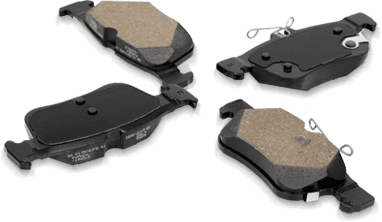
How many centimeters of brake pad are still okay?
Typically, brake pads should be replaced when they have worn down to around 3 millimeters or less. This is the minimum thickness recommended by most manufacturers to ensure safe braking performance. In centimeters, this would be equivalent to 0.3 centimeters. Therefore, any brake pad with more than 0.3 centimeters of thickness remaining would still be considered okay. **
What can be done to prevent brake pad wear?
To prevent brake pad wear, regular maintenance and care of the braking system is essential. This includes checking and replacing brake pads as needed, ensuring proper brake fluid levels, and keeping the brake system clean and free of debris. Additionally, avoiding aggressive driving habits such as hard braking and excessive speeding can help reduce brake pad wear. Lastly, using high-quality brake pads and following the manufacturer's recommended maintenance schedule can also help prevent premature wear. **
Top-Angebote
Products related to VALEO-601000-Brake-pad:
-
VALEO 302919 Brake pad setFitting Position: Rear Axle; Supplementary Article / Supplementary Info Info 2: without bolts/screws, with anti-squeak plate; Width [mm]: 140; Height: 52; Thickness: 18; Width 2 [mm]: 142; Height 2 [mm]: 60; Thickness 2 [mm]: 18; Wear Warning Contact: with integrated wear sensor, with acoustic wear warning; Number of wear indicators [per axle]: 2; Test Mark: ECE-R90; WVA Number: 25198, 25196, 25197; Weight [kg]: 1,22; Brake System: ATE / TEVES / CONTINENTAL; Equipment Code: BR2, BR3, BR6, BRY, BR1, X85; Construction Year to: 03/201327,49 £*Shipping: 8,45 £Secure redirect to the provider
-
VALEO 610636 Brake pad setFitting Position: Front Axle; Brake System: ADVICS; Width [mm]: 139; Height: 58; Thickness: 18; Wear Warning Contact: with integrated wear sensor, with acoustic wear warning; Number of wear indicators [per axle]: 2; Supplementary Article / Supplementary Info Info 2: without anti-squeak plate; Test Mark: ECE-R90; WVA Number: 23515, 24544; Weight [kg]: 1,8422,49 £*Shipping: 8,45 £Secure redirect to the provider
-
VALEO 882245 Brake pad setFitting Position: Front Axle, Rear Axle; Fitting Position: Rear Axle, 1st front axle, 1st rear axle, 2nd front axle, 2nd rear axle, Front Axle, non-steered trailing axle, steered trailing axle, steered leading axle, non-steered leading axle; Brake System: MERITOR; Supplementary Article / Supplementary Info Info 2: with bolts/screws; Width [mm]: 250; Wear Warning Contact: with integrated wear sensor, with integrated wear warning contact; Number of wear indicators [per axle]: 2; WVA Number: 29174, 29204, 29219, 29273, 29228; Weight [kg]: 11,188; Quantity Unit: Axle Set; Supplementary Info: OPTIPACK; Spring Type: for vehicles with air suspension; Version: 3, 4, 1, 2; Construction Year from: 07/2013; Axle: 1st drive axle, 2nd drive axle, for vehicles with steered leading axle; Construction Year to: 12/2023, 08/2023; Spring Design: Air Spring101,99 £*Shipping: 8,45 £Secure redirect to the provider
-
VALEO 301627A Brake pad setFitting Position: Front Axle; Brake System: AKEBONO; Supplementary Article / Supplementary Info Info 2: without bolts/screws, without anti-squeak plate; Width [mm]: 148,9; Height: 57,7; Thickness: 17,5; WVA Number: 21651, 21653; Wear Warning Contact: incl. wear warning contact; Number of wear indicators [per axle]: 2; Operating Mode: mechanical; Vibration: without vibration absorber; Test Mark: ECE-R90; Weight [kg]: 1,06; Construction Year from: 10/1993, 07/1994, 07/1993, 12/1994, 03/1996, 07/1997, 01/1997, 01/1998, 06/1998, 02/1998, 12/1999, 07/1989; Construction Year to: 06/2000, 02/1996, 09/1996, 08/1993, 06/1995, 09/1997, 12/1997, 06/1997, 06/2001, 08/1998, 10/2000, 06/2002, 09/2005, 09/2000, 12/1998, 09/199021,49 £*Shipping: 8,45 £Secure redirect to the provider
-
How do brake pad deposits form on the brake disc?
Brake pad deposits form on the brake disc when the brake pads generate excessive heat during braking. This heat can cause the brake pad material to transfer onto the surface of the brake disc, creating a layer of deposits. Factors such as aggressive driving, heavy braking, and using low-quality brake pads can contribute to the formation of these deposits. Over time, these deposits can lead to brake noise, vibration, and reduced braking performance, requiring the disc to be cleaned or replaced. Regular maintenance and using high-quality brake pads can help prevent the formation of brake pad deposits. **
-
What does glc brake pad warning mean?
The "glc brake pad warning" refers to a warning message or indicator light on a Mercedes-Benz GLC vehicle that alerts the driver to an issue with the brake pads. This warning typically indicates that the brake pads are worn and need to be replaced soon. It is important to address this warning promptly to ensure the safety and effectiveness of the vehicle's braking system. Ignoring this warning could lead to decreased braking performance and potential safety hazards. **
-
Is there enough brake pad for the motorcycle?
To determine if there is enough brake pad for the motorcycle, you will need to visually inspect the brake pads. If the brake pads are worn down to the minimum thickness specified by the manufacturer, then they will need to be replaced. Additionally, if there are any signs of uneven wear, damage, or deterioration, the brake pads should also be replaced. It is important to ensure that the brake pads have enough material to effectively stop the motorcycle and prevent any potential safety hazards. **
-
Is the brake disc broken or was the brake pad responsible for it?
Without further inspection, it is difficult to determine whether the brake disc is broken or if the brake pad is responsible for the issue. Both components play a crucial role in the braking system, and either one could be the cause of the problem. It is recommended to have a professional mechanic inspect the brake system to accurately diagnose the issue and determine the necessary repairs. **
Similar search terms for VALEO-601000-Brake-pad
-
VALEO 301721A Brake pad setFitting Position: Front Axle; Brake System: BOSCH; Supplementary Article / Supplementary Info Info 2: with bolts/screws, with anti-squeak plate; Width [mm]: 138; Height: 58; Thickness: 19; WVA Number: 23709, 23708; Wear Warning Contact: incl. wear warning contact; Number of wear indicators [per axle]: 1; Operating Mode: Electric; Vibration: without vibration absorber; Test Mark: ECE-R90; Weight [kg]: 2,05; Construction Year to: 12/2014, 05/2011, 06/2004, 06/2003, 11/2013, 01/2011, 09/2005, 06/2007, 01/2012, 04/2011, 12/2008, 10/2011, 05/2010; Vehicle Identification Number (VIN) from: 2232223; for brake disc diameter [mm]: 284; for RPO code: J42; Construction Year from: 01/2009, 02/2004, 02/2006, 10/2007, 01/2006, 07/2004; Emissions Standard: Euro 5, Euro 4 (D4)20,99 £*Shipping: 8,45 £Secure redirect to the provider
-
VALEO 302907 Brake pad setFitting Position: Front Axle; Brake System: ADVICS; Supplementary Article / Supplementary Info Info 2: without bolts/screws, without anti-squeak plate; Width [mm]: 140; Height: 59; Thickness: 16; Wear Warning Contact: with integrated wear sensor, with acoustic wear warning; Test Mark: ECE-R90; WVA Number: 25725; FMSI Code: D1711-8936; Weight [kg]: 1,41; Construction Year from: 05/201519,49 £*Shipping: 8,45 £Secure redirect to the provider
-
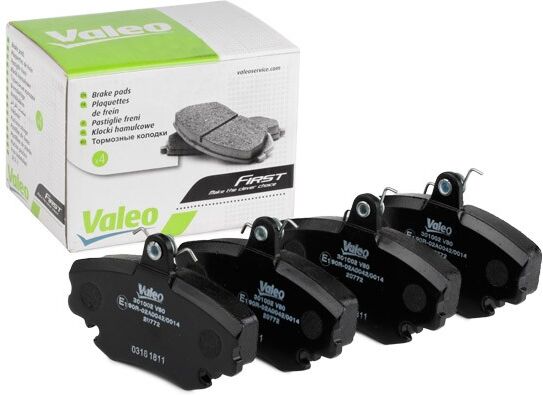
VALEO 301002 Brake pad setFitting Position: Front Axle; Width [mm]: 100; Height: 65; Thickness: 18; Wear Warning Contact: without integrated wear sensor; Supplementary Article / Supplementary Info Info 2: without anti-squeak plate; Test Mark: ECE-R90; WVA Number: 20772; Weight [kg]: 1,09; Quantity Unit: Axle Set; Supplementary Info: FIRST; Brake System: TRW / LUCAS / GIRLING; Construction Year from: 07/1989, 08/1989, 06/1990, 08/1990, 06/2008, 02/2012, 08/1986, 01/1994; Construction Year to: 07/1987, 09/1993, 06/1990, 01/1994, 08/1993, 02/1998, 10/2012, 12/1992, 12/2001, 11/2012, 07/2006, 03/2010, 07/1989, 02/1996, 10/1995; Brake Disc Type: solid, Vented; for brake disc diameter [mm]: 238, 259, 239; Braking/Driving Dynamics: for vehicles without ABS12,49 £*Shipping: 8,45 £Secure redirect to the provider
-
VALEO 301003 Brake pad setFitting Position: Front Axle; Width [mm]: 119; Height: 70; Thickness: 20; Wear Warning Contact: without integrated wear sensor; Wear Warning Contact: with acoustic wear warning; Supplementary Article / Supplementary Info Info 2: without anti-squeak plate; Test Mark: ECE-R90; WVA Number: 20901; Weight [kg]: 1,48; Quantity Unit: Axle Set; Supplementary Info: FIRST; Brake System: TRW / LUCAS / GIRLING; Construction Year from: 09/1986, 04/1988, 04/1985, 01/1988, 10/1984, 08/1985, 11/1988, 08/1990, 07/1991, 01/1992, 08/1992, 07/1992, 05/1983, 04/1978, 08/1987, 10/1988, 08/1989, 06/1991, 01/1994, 07/1994, 01/1985, 09/1989, 01/1995, 10/1994, 02/1995, 07/1995, 08/1995, 08/1993, 09/1993, 05/1996, 08/1988, 08/1979, 07/1996, 08/1996, 12/1995, 03/1994, 10/1996, 07/1993, 04/1997, 09/1997, 03/1999, 05/1999, 12/1993, 08/1984; Construction Year to: 08/1991, 07/1988, 07/1990, 07/1982, 07/1984, 07/1986, 12/1985, 12/1987, 05/1994, 01/1996, 03/1995, 07/1994, 05/1995, 06/1995, 07/1989, 07/1995, 08/2000, 07/1991, 10/1993, 07/1993, 12/1997, 05/1996, 02/1999, 02/1998, 12/1996, 06/1999, 04/1999, 09/1998, 12/1998, 02/1997, 12/1990, 03/1996, 11/2001, 08/2002, 10/2000, 12/2001; Brake Disc Type: Vented, solid; Vehicle Identification Number (VIN) to: G-073 363, G-073 362, C-902 000, G-902 400, N-300 000, N-025 000, V-160 000, 8D_V_169695, T-514 500; Vehicle Identification Number (VIN) from: D-900 001, P-000 001, L-085 001, TW-028 356, V-000 001, V-054 062, 8DV054062; Braking/Driving Dynamics: for vehicles without ABS; for PR number: 1LA; not for country specific design: China (Taiwan); for brake disc diameter [mm]: 28017,49 £*Shipping: 8,45 £Secure redirect to the provider
-
How does oil get on the brake pad of the bicycle disc brake?
Oil can get on the brake pad of a bicycle disc brake from a few different sources. One common way is through contamination from the chain or other bike components that have oil or lubricant on them. Additionally, if the bike is being worked on and oil is accidentally spilled or dripped onto the brake pad, it can also cause oil to get on the brake pad. Finally, if the bike is ridden in wet or muddy conditions, the brake pads can pick up oil and other contaminants from the road or trail surface. **
-
How many centimeters of brake pad are still acceptable?
Typically, brake pads are considered to be in good condition if they have at least 3-4 millimeters of pad material remaining. This translates to approximately 0.3-0.4 centimeters. Once the brake pad thickness reaches this minimum level, it is recommended to replace them to ensure optimal braking performance and safety. **
-
How many centimeters of brake pad are still okay?
Typically, brake pads should be replaced when they have worn down to around 3 millimeters or less. This is the minimum thickness recommended by most manufacturers to ensure safe braking performance. In centimeters, this would be equivalent to 0.3 centimeters. Therefore, any brake pad with more than 0.3 centimeters of thickness remaining would still be considered okay. **
-
What can be done to prevent brake pad wear?
To prevent brake pad wear, regular maintenance and care of the braking system is essential. This includes checking and replacing brake pads as needed, ensuring proper brake fluid levels, and keeping the brake system clean and free of debris. Additionally, avoiding aggressive driving habits such as hard braking and excessive speeding can help reduce brake pad wear. Lastly, using high-quality brake pads and following the manufacturer's recommended maintenance schedule can also help prevent premature wear. **
* All prices are inclusive of VAT and, if applicable, plus shipping costs. The offer information is based on the details provided by the respective shop and is updated through automated processes. Real-time updates do not occur, so deviations can occur in individual cases. ** Note: Parts of this content were created by AI.